Expert Interview: From Automation to Augmentation- How Artificial Intelligence is Re-Shaping Clinical Laboratory Workflow
Prof. Pradeep Kumar Dabla, Prof. Tony Badrick
1. Director Prof. & Head, Department of Biochemistry, G.B.Pant Institute of Postgraduate Medical Education & Research (GIPMER), NABL Quality Council of India Lead & Technical Assessor Medical Laboratories ISO 15189:2022 & PTP ISO 17043:2023, INDIA; pradeep_dabla@yahoo.com
2. Chief Research Officer. The Royal College of Pathologists of Australasia Quality Assurance Programs (RCPAQAP), AUSTRALIA; tony.badrick@rcpaqap.com.au
APFCB News Volume 5, Issue 1
Questions:
Q1. How will AI redefine the analytical workflow in medical laboratories over the next 5 years?
Over the next five years, AI will shift laboratory workflows from linear automation to intelligent, end-to-end orchestration. AI-driven middleware will enable real-time sample prioritization, dynamic quality control, automated validation, and the contextual interpretation of results across disciplines. This evolution toward “hyperautomation” will reduce manual interventions, shorten turnaround times, and improve reproducibility. Crucially, AI will integrate laboratory data with clinical and imaging information, transforming laboratories into proactive diagnostic hubs that support value-based care rather than volume-driven testing.
It is expected that in the next 5 years, the AI system will be able to tabulate the details of the patient and be able to define a workflow that the patient has to perform while in the laboratory, which will enable the clinician to extract maximum information from a minimum number of tests, thereby reducing the strain on both the patients and clinicians.
Analytical processes are related to laboratory errors, and risk mitigation will be done using AI. For instance, AI might be helpful for clot detection, wrong tube identification, and serum quality assessment based on hemolysis, icterus, and lipemia. Sample reaction for critical values is also detectable. The widespread adoption will depend on demonstrable explainability, prospective multicenter performance validation, and robust integration with laboratory information systems and middleware. Such tools are expected to improve the workflow.
AI will shorten the analytical workflow tremendously. High-throughput labs will become ultra-highthroughput labs. Human resources will become smaller; fewer personnel will process ever increasing number of tests. Cost-pressure will be enhanced by AI. Labs with “traditional” approaches (e.g., those that will not fully embrace and apply AI) will be left behind. The gap between “resource-rich” and “resource-limited” labs (countries) will become larger. As a result, the support of those resourcelimited countries by NGOs and other humanitarian organisations needs to be expanded.
The next five years will bring significant changes to medical laboratory workflows, though precise predictions are difficult due to rapid AI evolution. Experts anticipate a 40–50x improvement in AI capability by 2026 alone, with the possible emergence of AGI by around 2029. The impact will depend mainly on integration with Electronic Health Records. Developed countries are progressing well, while developing countries face challenges due to limited EHR adoption. Once integrated, AI will enable automated test selection, predictive diagnostics, automatic reporting, non-invasive biomarkers, home-based screening, and routine gene sequencing, shifting laboratories toward precision-driven diagnostics.

Over the next five years, AI will transform laboratory workflows from reactive automation to predictive, adaptive systems. AI will orchestrate sample routing, prioritize urgent tests, and optimize analyzer utilization in real time. Quality control will become continuous and patient-based, detecting subtle drifts before failures occur. Predictive maintenance will reduce downtime, while intelligent reruns will replace systematic checks. Overall, AI will embed clinical context into analytical processes, shifting laboratories toward risk-centered, self-optimizing ecosystems that deliver faster, safer, and more clinically relevant results.
Changes are likely to be substantial for disciplines that benefit from image analysis. Changes are already emerging in haematology, with red cell morphology pre-reading, microbiology, with automated plate reading, and histology, with flagging of suspicious areas and automated feature counting (e.g. mitotic figures). In clinical chemistry, AI is likely to enhance already highly automated systems, optimising sample scheduling and tailoring instrument maintenance to real-time requirements. Identification of analytical issues should improve through enhanced analysis of traditional and patient-based quality control results. Post-analytical error detection and auto-verification procedures are also set for dramatic improvements.
Q2. What emerging AI technologies show the highest potential for improving diagnostic accuracy in clinical chemistry?
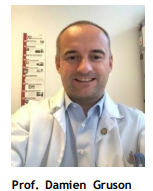
Prof. Damien Gruson
The highest-impact AI technologies include machine learning–based decision support systems, multimodal models integrating chemistry, hematology, molecular, and clinical data, and AI-enhanced mass spectrometry workflows. Algorithms for pattern recognition and anomaly detection improve result validation, reduce analytical errors, and identify clinically relevant discordances. In parallel, APFCB News Volume 5, Issue 1, 2026 Expert Opinion AI-supported automation in LC-MS and molecular platforms enhances standardization and traceability, bringing reference-level accuracy into routine practice. Together, these technologies strengthen diagnostic precision while supporting scalable, high-throughput laboratory operations.
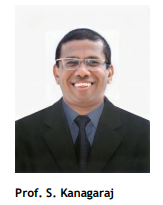
Prof. S. Kanagaraj
Explainable AI (XAI) show strong potential to improve diagnostic accuracy in clinical chemistry by combining predictive performance with transparency. These methods clarify how individual biomarkers influence diagnostic outcomes, enabling clinicians to validate AI decisions against established biochemical knowledge. By making model reasoning visible, explainable AI enhances trust, reduces diagnostic uncertainty, and supports safer clinical adoption of advanced analytical tools.
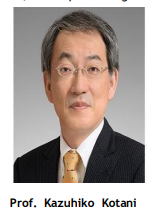
Prof. Kazuhiko Kotani
Patient-based real-time quality control (PBRTQC) contributes to the results of routine patient tests to detect analytical bias, and it may improve diagnostic accuracy in clinical chemistry. Conventional PBRTQC methods rely on moving averages and moving medians; however, integrating AI can enhance sensitivity to systematic shifts and address operational challenges, such as false alarms. Such AI-enabled, advanced PBRTQC frameworks are considered to be one of the technologies that can support improved analytical accuracy. Adding it to diagnostic tools of clinical pictures using AI will further aid diagnostic accuracy with high patient care.
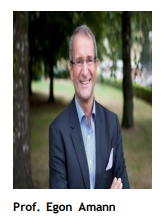
Prof. Egon Amann
This is hard to predict. AI technologies are no “wonder-land”. They are based on existing experiences/publications and large language models. AI hallucinations may work against improved diagnostic accuracy. On the other hand, new clinical chemistry techniques, including gene sequencing, genetic tests, PCR-based tests, as well as POC tests will certainly benefit from new AI technologies.
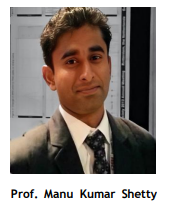
Prof. Manu Kumar Shetty
In the next five years, advanced AI systems, Agentic AI, including early AGI-like models, are expected to significantly improve diagnostic accuracy. Unlike current AI models that depend on large datasets, future systems will be able to reason, generalise, and learn effectively from smaller datasets. These models will generate biologically meaningful synthetic data, improve the interpretation of rare and borderline cases, and enhance outcome prediction. Simultaneously, the declining cost of whole-genome sequencing will make it routine. Integration of genomics, biochemical data, clinical history, and longitudinal trends will transform clinical chemistry into a knowledge-driven diagnostic discipline.
Dr. Bernard Gouget
The most promising technologies include agentic AI for closed-loop quality actions, uncertaintyaware AI that provides confidence levels, and multimodal models integrating biomarkers with clinical data and trends. AI-driven interference detection will identify subtle analytical artifacts beyond traditional indices. Digital twins will enable personalized biological baselines, while knowledge- augmented large language models will support structured, explainable interpretations. Together, these approaches will move clinical chemistry from isolated result validation to integrated, patient-centered diagnostic intelligence, significantly improving specificity, consistency, and early detection of clinically meaningful abnormalities.
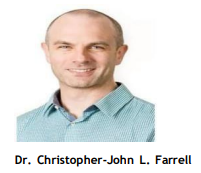
Dr. Christopher-John L. Farrell
Machine learning models work well with the numeric data generated in clinical chemistry. Explainable AI (XAI) approaches are particularly attractive for quality control, trustworthiness, and regulatory reasons.
The use of machine learning will facilitate greater integration of results: across clinical chemistry test panels, across time, and across pathology disciplines. There will also be greater integration of clinical data from electronic health records. Enhanced analysis of integrated data will give diagnostic insights outside traditional care pathways, highlighting for clinicians diagnoses they might not have considered based on the patient’s presenting complaint or that are yet to manifest clinically.
Q3. How will the role of laboratory professionals evolve as AI systems handle more routine tasks?
Prof. Damien Gruson
As AI assumes routine, repetitive tasks, laboratory professionals will evolve from operators to clinical and digital experts. Their role will increasingly focus on supervising AI systems, interpreting complex results, ensuring clinical relevance, and communicating actionable insights to clinicians. New competencies will emerge in data literacy, AI governance, and quality oversight. Rather than replacing professionals, AI augments their expertise, allowing them to act as “orchestrators of diagnostics” and key contributors to integrated, value-based patient pathways.
Prof. S. Kanagaraj
As AI systems will be able to handle most of the managerial, workflow allotment and interpretation tasks by themselves, it will thus reduce work stress from the laboratory professionals, thereby increasing their efficiency in clinical tests. However, it is required that professionals are given the option to review the interpretation of the tests provided by the AI.
Prof. Kazuhiko Kotani
The professionals can conduct AI verification and take greater responsibility for the use and the results.
Prof. Egon Amann
Less hands-on work, more computer work, including sophisticated AI programming / test adaptations. More AI know-how in training and education will be a “must”.
Prof. Manu Kumar Shetty
As AI and robotics increasingly handle routine laboratory tasks, the role of laboratory professionals will change substantially. Semi-autonomous or humanoid robots will manage sample processing, analysis, and reporting, while professionals focus on oversight, validation, and quality assurance. Human expertise will remain essential for specialised and complex testing. Laboratory professionals will increasingly monitor AI systems, design new diagnostic protocols, lead research, and drive innovation. Although the number of routine staff may reduce, demand will grow for highly skilled professionals with strong domain knowledge, AI literacy, and research capability, shifting the role toward clinical-diagnostic leadership.
Dr. Bernard Gouget
As AI automates repetitive tasks, laboratory professionals will evolve into supervisors of intelligent systems and clinical partners. Their focus will shift to biological risk arbitration, complex case interpretation, and multidisciplinary dialogue with clinicians.
They will lead AI governance, including validation, explainability, bias control, and performance monitoring. Professionals will also design predictive quality strategies and oversee dashboards of uncertainty and risk. Rather than replacing expertise, AI will augment it, enabling laboratorians to concentrate on clinical value, patient safety, and strategic leadership.
Dr. Christopher-John L. Farrell
The role of laboratory professionals will likely move up the value chain, with greater focus on quality, governance, and liaison activities. New skills will be required within these realms and greater cross-disciplinary knowledge will be required as AI drives integration of pathology disciplines.
New quality activities will include validating and monitoring AI models. Detecting model drift, hidden failure modes, and bias will be important. Laboratory professionals will be involved in troubleshooting incorrect model predictions. Clinical liaison will also change. Laboratory professionals will need to be able to give advice about the predictions from models, particularly when they are unexpected.
Q4. What are the major risks, ethical considerations, and regulatory challenges to remain competitive and resilient in an AI-enhanced diagnostic ecosystem?
Prof. Damien Gruson
Major challenges include data bias, lack of transparency, automation bias, and unclear liability when AI influences clinical decisions. Regulatory fragmentation, limited post-market surveillance, and insufficient explainability threaten trust and adoption. Ethical deployment requires robust data governance, human oversight, and alignment with international frameworks such as the EU AI Act and WHO guidance. To remain resilient, laboratories must embed ethics-by-design, ensure continuous performance monitoring, and invest in workforce training to critically evaluate AI outputs.
Prof. S. Kanagaraj
The major risks are the elimination of the human factor while assigning a treatment regime to a patient, especially in a country like India, with Universal healthcare. In addition to that, there is also a risk to the privacy of our healthcare history, which may be used unethically for dynamic pricing of insurance premiums.
Prof. Kazuhiko Kotani
The “black-box” nature of AI systems is an ethical concern. Privacy and security also remain risks, including re-identification of anonymized data and information leakage. Regulatory differences in national stances on AI governance are also of concern. The European Union, through the AI Act, takes a precautionary approach that prioritizes transparency, accountability, and safeguards, whereas the United States relies mainly on sector-specific guidance and existing legal framework. Such differences may indicate the need for international coordination to support fair competition for AI.
Prof. Egon Amann
“Patient safety first” principle and ethical considerations will not change, but will remain steady. New risks may appear with more dependence on AI. This could be counteracted by usual, maybe even enhanced, validation and verification testing, as is the case with new clinical tests and new assays.
Prof. Manu Kumar Shetty
A major risk is rapid AI and AGI development without sufficiently mature regulatory frameworks. While unsafe AI tools are unlikely to be widely adopted, partial or poorly regulated implementations can still cause harm, particularly in developing countries. Ethical concerns include accountability for errors due to bias, data limitations, or system failures. Regulatory frameworks are likely to evolve reactively in response to adverse outcomes. Key challenges include biased algorithms, vendor-locked systems, lack of transparency, and profit-driven design. Healthcare AI must remain open, explainable, interoperable, and patient-centric, supported by strong ethical oversight and proactive regulation.
Dr. Bernard Gouget
Major risks include algorithmic bias, model drift, silent errors, cybersecurity threats, and overreliance on automation. Ethical priorities are equity, transparency, data protection, and maintaining human accountability for clinical decisions. Regulators face challenges in managing adaptive AI as evolving medical devices, requiring continuous validation, traceability, and real-world monitoring. Laboratories must ensure explainability, robust governance, and resilience with fallback procedures. Success will depend on deploying trustworthy AI that balances innovation with safety, compliance, and sustained patient-centered responsibility.
Dr. Christopher-John L. Farrell
One risk is inappropriate levels of trust. Laboratories will not benefit from accurate models that staff do not trust and consistently overrule. However, healthy levels of mistrust are required so we can identify when model performance degrades. Ethically, it is essential that models are fair for all patient groups. It is also important that we do not unduly disadvantage patients with rare diseases or atypical presentations. From a regulatory perspective, requirements should be considered early during in-house model development. For third party models, there should be good collaboration with the vendor, with transparency and sufficient scope of audit rights.
Concluding remarks
The AI transformation is irreversible. The competitiveness and resilience of laboratories will depend on their ability to deploy AI that is trustworthy, governed, auditable, and ethically robust. The question is no longer “AI or not AI,” but rather which AI to use, under what control, with what responsibility, and for what clinical value. Laboratories that institutionalize AI as a core discipline of their quality system, alongside metrology and accreditation, will turn this revolution into a sustainable strategic advantage. From automation to augmentation, AI is redefining the value of the laboratory at the heart of patient care.
Authors Contribution: All authors are independent experts and equally contributed to the expert interview article published.
Funding: None declared
Conflict of Interest: None declared
Experts Curriculum Vitae:
1. Prof. Damien Gruson
Is the Head of the Department of Clinical Biochemistry at Cliniques Universitaires Saint-Luc, Brussels, and holds a teaching and research position within the Endocrinology, Diabetes, and Nutrition research unit at UCLouvain. He serves as Chair of the IFCC Emerging Technologies Division and is a board member of the Royal Belgian Society of Laboratory Medicine and the Belgian Thyroid Club. Prof. Gruson is a Fellow of the European Society of Cardiology, the Heart Failure Association, and the AACC Academy
2. Prof. S. Kanagaraj
Is a Professor of Mechanical Engineering at IIT Guwahati, India. He is specialised in biomaterials, biomedical devices, and assistive technologies. A PhD from IIT Kharagpur with post-doctoral work in Portugal, he has authored over 100 publications, holds multiple US and Indian patents, and has supervised several PhD scholars working in biomedical innovation. He has established key research labs at IITG, leads major national initiatives in biomedical device development, and currently heads the Jyoti & Bhupat Mehta School of Health Sciences and Technology. Several of his lab’s technologies are already in patient trials, and his students have successfully launched startups in this space.
3. Prof. Kazuhiko Kotani
MD, PhD is a full Professor at Jichi Medical University & Department of Clinical Laboratory Medicine. He is a specialist of community medicine, and his research is focused on community healthcare design, health promotion, and disease prevention. He is an expert of biomarker science (i.e., lipids and lipoproteins), and has a research theme of the pathophysiology as well as management of cardiometabolic diseases, especially familial hypercholesterolemia (FH).
4. Prof. Egon Amann
Is an independent consultant in Life Sciences, Quality Systems and Clinical Chemistry. He is Professor Emeritus of the University of Applied Sciences in Hamm-Lippstadt, Germany, and was an Honorary Professor at Philipps University in Marburg, Germany. He has long-time experience in the pharmaceutical and diagnostic industries. He was executive employee with Behringwerke AG, Dade Behring Diagnostics, Siemens Healthcare Diagnostics, and Hoechst AG in Germany. He spent many years in human vaccine and human plasma protein R&D and in diagnostic assays development in Germany, Japan and the US. He has 18 patents granted and > 100 peer-reviewed publications, and several book chapters in the areas listed above. He is also serving Chair of the IFCC TF-GLQ (Task Force on Global Lab Quality).
5. Prof. Manu Kumar Shetty
Is a distinguished Professor of Clinical Pharmacology at Maulana Azad Medical College, New Delhi and a passionate AI in healthcare innovator with 8yrs of experience in machine learning, data mining, and predictive model development. He effectively blends deep clinical insight with advanced computational tools to drive meaningful diagnostic and therapeutic innovation. Dr Shetty is the recipient of the 2023 Lab2Market IndiaAI Award (Government of India) for his work on an Explainable ECG-based AI model. He actively engages in research, education, mentorship, and startup support, bridging healthcare and technology to improve patient outcomes and empower the next generation of medical professionals.
6. Dr. Bernard Gouget
Is the President of the National Committee for the Selection of Reference Laboratories at the French Ministry of Health, France and former President of the Healthcare Division at the national body of accreditation COFRAC. He previously served as Associate Professor of Physiology at Paris Cité University (Necker Children’s Hospital). He is currently Secretary of the IFCC Emerging Technologies Division Executive Committee, Chair of the IFCC Task Force on History, and IFCC/EFLM Labac representative
7. Dr. Christopher-John L. Farrell
Is the Clinical Director at Liverpool in Sydney. He trained in chemical pathology at Royal North Shore Hospital and Laverty Pathology. After obtaining Fellowship in 2012, he continued with Laverty Pathology, eventually becoming Director of Clinical Chemistry and Laverty Pathology. Dr. Chris has a keen interest in the education and training of pathologists and scientists. He was previously the NSW/ACT education representative for the Australasian Association for Clinical Biochemistry and Laboratory Medicine (AACB) and is currently on the AACB Board of Examiners. In his research, he is currently interested in the use of laboratory data to answer clinical questions, streamline laboratory workflows and improve analytical quality.