Expert Interview-The Role of National Accreditation Bodies in Advancing ISO: 15189 Accreditation in Developing Nations
Dr.Vivek Pant
Department of Clinical Chemistry, Samyak Diagnostic Laboratory, Kathmandu, Nepal Email: drvpant@gmail.com
APFCB News Volume 5, Issue 1
In many low-resource settings, the journey toward ISO 15189 accreditation is constrained by limited access to impartial, affordable, and context-sensitive assessment services. Establishing a functional national accreditation body involves navigating challenges such as building technical capacity, ensuring governance impartiality, securing international recognition, and fostering stakeholder trust all while operating within constrained resources.
This edition’s expert interview brings together practitioners who have been directly involved in establishing, governing, or strengthening national ABs in developing countries with Nepal as an example. Their firsthand experiences provide real-world insights into the operational, strategic, and collaborative efforts required to build accreditation systems that are not only compliant with international norms such as ISO/IEC 17011, but also responsive to local healthcare needs.
Through their perspectives, we explore:
? The necessity of local accreditation bodies in promoting scalable and sustainable quality improvement.
? Structural and operational challenges in building credible Accreditation bodies.
? Strategies for capacity development, stakeholder engagement, and integration into national health systems, and
? The long-term vision for accreditation as a pillar of laboratory quality and patient safety in emerging economies.
Questions
Why is a nationally recognized Conformity Assessment body important for the sustainable adoption of ISO 15189 in developing countries?
For a developing country, a nationally recognized, competent, and ILAC-signatory Conformity Assessment Body (CAB) which is accredited as per 17011:2017 is the most appropriate for sustainable adoption of ISO 15189. It transforms the standard from a costly imported certificate for a few into a scalable, locally-owned tool for systemic healthcare improvement. It builds the permanent institutional capacity that turns an international standard into a national reality, ensuring better patient outcomes, efficient use of resources, and integration into the global health community. In the absence of such nationally recognized CAB
a. A. few rich labs get expensive foreign accreditation.
b. The government has no domestic mechanism to lift standards for hundreds of other public labs.
c. Quality remains fragmented and unequal.
d. Public health decisions are based on unreliable data.
e. The country remains perpetually dependent on foreign technical assistance.
f. The adoption of ISO 15189 stalls and is seen as an elite, unsustainable cost.
Nationally recognized CAB’s are the cornerstones of national quality infrastructure in their respective countries. Their recognition by ILAC/IAF means that a medical laboratory accredited by, for example, India's NABL, QAI, IQAS or South Africa's SANAS to ISO 15189, is considered technically competent on par with one accredited by a European or American body. This is essential for:
a. Patient Safety: Reliable lab results domestically.
b. Public Health: Trustworthy disease surveillance data.
c. International Trade: Acceptance of exported goods (food, pharmaceuticals) without costly retesting.
d. Economic Development: Building a reputation for quality and attracting investment
A nationally recognized conformity assessment body provides ownership, sustainability, and contextual relevance to ISO 15189 implementation. Without a local accreditation body, laboratories depend on foreign accreditation services, which are costly, episodic, and often disconnected from national health priorities. Further, Nepal’s laboratories particularly those in public hospitals and provincial facilities cannot sustainably rely on foreign accreditation bodies due to cost, logistics, and limited contextual understanding of national regulatory and health system realities.
A national body ensures continuity, affordability, and alignment with public health systems, while strengthening regulatory oversight and confidence in laboratory results. From Nepal’s perspective, a nationally recognized conformity assessment body such as AERSSC, established as a formal accreditation body aligned with ISO/IEC 17011, is essential for the sustainable adoption of ISO 15189 because it embeds quality and competence within the national health system rather than treating accreditation as an external or donor-driven activity.
Nepal’s National Laboratory Policy clearly emphasizes quality, reliability, and standardization of laboratory services across all levels of the health system. In this context, AERSSC provides a locally governed, nationally accountable accreditation mechanism that accredits medical laboratories to ISO 15189 and testing and calibration laboratories to ISO/IEC 17025 through a structured accreditation lifecycle, independent decision-making, and defined governance and impartiality safeguards. Through this role, AERSSC enables Nepal to institutionalize ISO 15189 within its own regulatory and service delivery framework, ensuring continuity, affordability, national ownership, and long-term sustainability.

A nationally recognized CAB will help create credibility and trust in the local accreditation system which will in turn encourage the local laboratories to adopt ISO 15189. The local regulatory requirements and ISO documents can be integrated into a national guideline for more clarity on the user’s perspective. This also would help develop awareness regarding laboratory accreditation and its importance to the community as well as strengthen confidence of doctors regarding laboratory results.
Once the CAB is nationally recognized, it will help create uniformity in laboratory accreditation and will make it more accessible and cost effective for the laboratories As awareness is generated, the need for local assessors will be in demand, hence creating more local expertise, which will lessen our reliance on foreign resources. This will help develop local as well as international confidence in our system of accreditation.
2. What are the most significant structural and operational challenges in establishing an impartial and competent national accreditation body in low-resource settings?
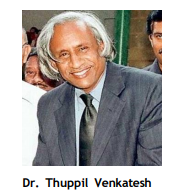
Dr. Thuppil Venkatesh
The most significant structural challenges are:
1. Political & Legal Framework
2. Economic & Financial Sustainability.
3. Human Capital & Institutional Culture
The most important operational challenges are
1. Technical Competence Development.
2. Impartiality Management.
3. Infrastructure & Market Challenges
The Implied Solutions are
a. Strong Legal Foundation First: Begin with a robust law guaranteeing independence. Phased Sectorial Approach: Start with one high-priority sector (e.g., medical labs for public health, or calibration labs for trade) to build credibility and a success story.
b. Strategic Partnerships: "Twinning" with an established National Accreditation Bodies (e.g., SANAS, NABL, QAI) for long-term mentorship, not just short-term projects.
c. Integrated Donor Support: Donors must fund system-building, not just isolated training, and support the AB's core operational costs during the long start-up phase.
d. Build Regulator Demand: Work intensively with ministries of health, environment, and trade to make accredited conformity assessment a regulatory requirement.
In essence, the challenge is not just technical but deeply socio-political. It involves building a new institution that embodies principles of neutrality, expertise, and transparency in an environment where those principles are often in short supply. The most significant challenge is transforming the mind-set from seeing accreditation as a certificate to be procured, to understanding it as a systemic public good that underpins health, safety, and economic growth.
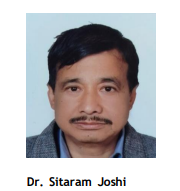
Dr. Sitaram Joshi
The key challenges include ensuring institutional and functional independence, securing sustainable financing, and developing competent human resources. In low-resource settings, accreditation bodies often operate within government ecosystems, making impartiality and freedom from political influence a constant concern. Even as an independent entity, AERSSC must continuously demonstrate impartiality, transparency, and technical independence through governance structures, conflict-of-interest controls, and separation of assessment and decisionmaking functions.
Operationally, limited numbers of trained assessors, uneven laboratory maturity across federal, provincial, and local levels, and the absence of fully digitalized accreditation systems constrain effectiveness. These challenges are compounded by limited financial resources and the need to build credibility while simultaneously developing systems, people, and trust. In Nepal, maintaining institutional independence while working closely with the Ministry of Health and Population and other regulators requires careful governance, strong ethical frameworks, transparent decision-making, and phased development aligned with national health system reforms.
Dr. Keyoor Gautam
A lot of challenges emerge right from the conception of the idea of establishing a CAB in low resource settings.
Firstly, the accreditation body has to convince the government that it has not been established to take away the governments authorities. Privately run CAB has not been easily accepted by the government agencies and they are hesitant to even promote them. They would rather belief and promote CAB from other countries, rather than rely, nurture and uplift their own. I remember in 2015 when we received our accreditation certificate. No officials from the Ministries of Health, Finance, or Industry attended, citing a lack of policy on whether a private body could grant accreditation. This experience highlights the need for clearer government support and collaboration to formally recognize and validate the impartiality of local accreditation bodies. Financial sustainability is another major factor which limits the growth of the organization.
Lack of skilled and competent man power in a major operational challenge. Assessors must be trained well, but more importantly should have conducted assessments to raise their competence. Nepal is a small country hence a lot of conflict of interests are seen when it comes to choosing a local assessor. They rather prefer someone from out of the country, so that their technical flaws are not exposed locally.
3. How can a developing country ensure that its national accreditation body meets international requirements (e.g., ISO/IEC 17011) without relying heavily on external resources?
Dr. Thuppil Venkatesh
Developing countries can build an internationally compliant National Accreditation Body (NAB) that meets ISO/IEC 17011 with minimal long-term external dependency by adopting a strategic, phased, and resource-maximizing approach focused on self-reliance from the outset. Complete initial isolation is unrealistic, but the goal is to rapidly internalize competence and systems. The framework for achieving this is moving from foundational steps to operational sustainability. This can be achieved by laying the unshakeable foundation, building core competence with internal resources and achieving operational sustainability.
The self-reliance can be achieved through:
a. Challenging internal solution (Minimizing External Reliance)
b. Legal Authority & Impartiality supporting a strong accreditation act with governance and financial autonomy.
c. Lack of experts recruit can be overcome by involving national technical institutions and using intensive internal "learn-by-doing" on a pilot sector.
d. Cost & sustainability to be supported by domestic demand via regulation; using a sliding-scale fee model and aiming for legislated financial self-sufficiency.
e. For technical validation one can use national Technical Expert Committees (TECs) for decisionmaking; develop national PT schemes.
f. For gap analysis one can hire a single, targeted foreign expert for a defined review, not a longterm consultancy and culture of impartiality enforce through strict conflict-of-interest rules and use of transparency process (public web portals) as a disciplinary tool.
Dr. Sitaram Joshi
This can be achieved through phased implementation, peer learning, and regional cooperation. In Nepal, AERSSC has focused on internal capacity development and gradual alignment with ISO/IEC 17011, rather than heavy dependence on external consultants. Structured self-assessments against the standard, risk-based internal audits, and management reviews are used to benchmark operations against international requirements while retaining national ownership and cost control. Rather than full reliance on international consultants, AERSSC prioritizes staff competency development, participation in regional accreditation networks, and engagement with international forums. This approach has culminated in the submission of AERSSC’s Mutual Recognition Arrangement (MRA) application to APAC, along with all required documentation, demonstrating growing maturity and commitment to international accreditation norms.
Dr. Keyoor Gautam
The first step towards to building strength in any organization is its manpower. The national accreditation body itself needs to get trained regarding both structural and operational requirements to be fulfilled as per ISO 17011. Capacity building has to be focused upon with the development of an efficient and reliable team. External support, resources and guidance will definitely be needed in the preliminary stages but there should be a gradual transition focusing on self-sustainability and self-sufficiency.
4. What strategies are effective in building local technical assessor capacity for ISO 15189, especially in regions with limited training infrastructure?
Dr. Thuppil Venkatesh
Building local technical assessor capacity for ISO 15189 in regions with limited training infrastructure requires a shift from conventional, resource-intensive "fly-in expert" models to innovative, low-cost, and self-perpetuating strategies. The goal is to create a sustainable internal pipeline of expertise. Firstly one needs to adopt strategic selection & "Seed Core" development. Then one has to consider low-infrastructure, high-impact training modalities followed by creating a sustainable practice ecosystem. Final step is to leverage the existing systems & partnerships creatively.
The key strategies for effective building of local technical assessors are to stop thinking of "training" as an event and start building it as a system. By investing first in a small, committed master core, leveraging peer-based practical exercises like mock assessments, and using lowbandwidth digital tools and local partnerships, a country can build a robust, home-grown cadre of ISO 15189 assessors. This approach not only builds capacity but also ensures the assessment process is culturally and contextually relevant, which is essential for sustainable improvement in local laboratories. The most effective training infrastructure is not a building with projectors, but a well-designed process of peer-led, practice-based learning.
Dr. Sitaram Joshi
The National Laboratory Policy highlights the development of competent human resources as a cornerstone of laboratory quality. AERSSC operationalizes this by identifying and training assessors from Nepal’s existing laboratory workforce, including public hospitals, national reference laboratories, academic institutions, regulatory bodies, and professional councils.
A competency-based assessor development framework is applied, supported by mentorship and supervised assessments. To date, AERSSC has organized 12 batches of ISO 15189 and ISO/IEC 17025 training, creating a growing national pool of assessors. Blended learning approaches combining online instruction with practical, supervised field assessments have proven effective in reaching assessors across provinces, even where training infrastructure is limited. Experienced assessors from the region, including India, have supported mentorship and calibration during early phases.
but have not been able to develop their competency due to lack of opportunity to assess laboratories. So, there can be an initial hand holding with any foreign accreditation body. With this hand holding, the local assessor can voluntarily attend a minimum of 5 to 10 assessments in foreign countries within the region and develop their skills, which can then be applied locally to develop their own competency and also share knowledge to their peers. This will help develop local technical assessor capacity for ISO 15189.
5. How should a national accreditation body engage with government, laboratories, and international bodies to foster trust and credibility?
Dr. Thuppil Venkatesh
CAB need to align with National Priorities.
a. Map to national development plans: proactively demonstrate how a robust accreditation system supports key national goals: public health (reliable diagnostics), industrialization (quality exports), SDG achievement (good health, clean water).
b. Co-develop sectorial roadmaps: Work with the Ministries of health, agriculture, and to create mandatory accreditation roadmaps for critical sectors (e.g., all reference labs for pandemic diseases to be accredited by Year X).
c. Demonstrate value, not just cost: produce impact data: regularly report metrics: "Accreditation of good number of water testing labs has reduced waterborne disease outbreaks in regions A, B, C." or "Our accredited certification helped 200 SMEs access export markets."
d. Translate technical activity into socio-economic outcomes. Uphold independence while being accountable: Formalize a "Memorandum of Understanding (MoU)": Have a clear, public MoU with relevant ministries that defines roles: the government sets policy and regulatory requirements; the NAB provides independent technical conformity assessment. This clarifies separation of powers.
e. Transparent Governance: Include government representatives on the Governing Board, but as one voice among many (industry, academia, and consumers), ensuring the NAB is not captured by any single interest.
f. Serve as a technical advisor: Proactively advise on legislation and regulations that involve conformity assessment, ensuring they are effective, non-discriminatory, and aligned with international best practices (WTO/TBT principles).
g. Engaging with laboratories & industry: From Auditor to Value-Added Partner Engaging with international bodies: From Applicant to Peer The NAB is a strategic asset for national development, not a cost centre. Laboratories fairness & added value provide affordable guidance & pre-assessments.
Run a transparent, independent appeals process. The NAB is here to help us improve and be more competitive, not just to punish us. Actively participate in international committees for technical competence & integrity. Undergo and openly learn from peer evaluation. This NAB operates at the same professional level as its global peers; its results can be trusted worldwide.
Dr. Sitaram Joshi
The National Laboratory Policy calls for coordinated action among regulators, service providers, and partners. Trust is built through transparency, consistency, and technical integrity. With laboratories, AERSSC emphasizes guidance, clarity of requirements, and predictable processes rather than enforcement alone, particularly for public sector laboratories that form the backbone of Nepal’s diagnostic services. Engagement with government focuses on aligning accreditation with national health objectives such as laboratory strengthening and universal health coverage while safeguarding technical and decision-making independence. International engagement through regional networks, observer participation, and MRA processes demonstrates alignment with global accreditation practices and builds confidence in AERSSC’s accreditation decision.
Dr. Keyoor Gautam
The local accreditation body should have good working terms with the local government so as to avoid any conflict of interest. They can hold various workshops for the concerned government officials which will foster trust in them. Regular updates on the accreditation body status and activities should be shared with the government. The benefits of accreditation and how it has helped the community get accurate result for proper treatment has to be shared with the concerned government officials. There should be a close relationship between the CAB and the laboratories. The CAB should be readily accessible to the laboratories for their accreditation needs which may be training, document preparation, logistic, facilitation of calibration agencies etc. Also CABs competency is reflected by its ILAC signature status. Hence MRA recognition will definitely help foster trust and credibility at the same time discourage other international accreditation agencies to encroach. CAB also has to gain trust from the international bodies by taking MRA status which is highest status that it can attain. They have to actively participate in regional bodies activates and show them our willingness to develop our local agencies despite in a resource limited setup.
6. In what ways can a local accreditation system make ISO 15189 more accessible and affordable for laboratories in the public and private sectors?
Dr. Thuppil Venkatesh
A well-designed local accreditation system is the single most powerful lever to make ISO 15189 accessible and affordable for laboratories in developing countries.It directly tackles the two greatest barriers: high cost and perceived complexity. CAB need to build the value of the local accreditation mark through
a. Create public awareness campaigns: educate clinicians, hospital administrators, and the public that the national accreditation symbol means reliable results. This drives patient choice toward accredited private labs.
b. Also reciprocity with key partners: secure Mutual Recognition Agreements (MRAs) with neighbouring countries or major trade partners. This means a locally accredited lab's results are accepted for cross-border patient care or export testing, eliminating the need for costly dual accreditation.
Dr. Sitaram Joshi
A local accreditation system significantly reduces costs by eliminating foreign assessor travel, using local expertise, and applying context-appropriate fee structures. AERSSC promotes stepwise and phased implementation of ISO 15189, allowing laboratories to progressively meet requirements rather than treating accreditation as a one-time, high-cost hurdle. Providing guidance documents, training workshops, and gap assessment support enables laboratories across district, provincial, and private sectors to engage meaningfully with quality improvement. Anchoring accreditation within the National Laboratory Policy reassures laboratories that ISO 15189 adoption is an integral component of national health system strengthening, not an optional or temporary initiative. The recent submission of AERSSC’s MRA application further reinforces confidence in the long-term recognition and credibility of national accreditation.
Dr. Keyoor Gautam
There is a misconception among hospital administrators and laboratory professionals in Nepal that laboratory accreditation with ISO 15189 are synonymous to NABL, which is an Indian accrediting body. I used to get a lot of queries where they asked is your accreditation an ISO or NABL? The local accreditation body should work on creating awareness among the stakeholders so that they build the trust and confidence of the local accreditation system. Another misconception is that the local accreditation body is just a local organization providing ISO certificates and has no linkage to the regional accreditation body and to ILAC. This has to be addressed and made to understand that this local accreditation body has its roots till the ILAC.
7. What are common barriers laboratories faces when seeking accreditation through a new or emerging national body, and how can these be addressed?
Dr. Thuppil Venkatesh
When laboratories in a developing country engage with a new or emerging National Accreditation Body (NAB), they face a distinct set of barriers that go beyond the general challenges of implementing ISO 15189. These barriers stem from the perceived and real risks of investing in an unproven system.
Barrier 1: Lack of trust & credibility in the New NAB
Barrier 2: Inconsistency and inexperience of assessors
Barrier 3: Unclear value proposition and Return on Investment (ROI)
Barrier 4: Prohibitive Cost and Resource Burden
Barrier 5: Cumbersome and opaque processes
A new NAB must recognize that its first challenge is not to assess labs, but to create a willing and confident customer base. It must act not as a passive judge, but as an active facilitator and partner. By proactively addressing these fears through transparency, support, and a clear demonstration of value, the emerging NAB can build a virtuous cycle: early labs succeed, their success builds the NAB's reputation, which attracts more labs, creating a sustainable ecosystem of quality. The goal is to make the path to accreditation clear, achievable, and demonstrably worthwhile.
Dr. Sitaram Joshi
Common barriers include limited awareness, concerns about assessor consistency, fear of unpredictable decisions, and questions regarding international recognition. These are natural concerns in the early stages of a national accreditation body. AERSSC addresses them by ensuring assessor competence, applying accreditation criteria uniformly, maintaining transparent decision-making, and clearly communicating alignment with ISO 15189 and ISO/IEC 17011. Building a track record of credible assessments, documenting processes, and progressing toward regional and international recognition arrangements are essential to strengthening laboratory confidence over time.
Dr. Keyoor Gautam
An emerging national accreditation body faces a lot of hurdles in establishing itself and building confidence locally as well as internationally. Additionally the laboratories themselves are skeptical regarding the local CABs authority.
NABL and accreditation has been taken synonymously due to our proximity to India as well as a lot of technical staff would have been trained there. If a laboratory take accreditation through a new emerging national body, if has to go through the pain of defending themselves regarding the accreditation that they have taken. It takes time for the community to realize and accept the fact that this local accreditation body is also equally capable as other countries accreditation body.
Another challenge is that the new accreditation body would not have created the technical manuals for laboratories to follow in all departments. This forces the laboratories to rely upon other international bodies technical recommendations.
8. How can risk-based thinking and continuous improvement be embedded into the operations of a young accreditation body?
Dr. Thuppil Venkatesh
A new NAB must recognize that its first challenge is not to assess labs, but to create a willing and confident customer base. It must act not as a passive judge, but as an active facilitator and partner. By proactively addressing these fears through transparency, support, and a clear demonstration of value, the emerging NAB can build a virtuous cycle: early labs succeed, their success builds the NAB's reputation, which attracts more labs, creating a sustainable ecosystem of quality. The goal is to make the path to accreditation clear, achievable, and demonstrably worthwhile.
Risk-based thinking means proactively identifying what could go wrong, assessing its impact, and acting to prevent or mitigate it in all decisions and processes. It could be embedded as
A. Formalize a simple, action-oriented risk management system
B. Institutionalizing continuous improvement
C. Build feedback loops into every core process
D. Establish clear improvement mechanisms
E. Integrating both into organizational culture & leadership
For a young NAB, risk-based thinking is its nervous system, sensing threats and opportunities. Continuous improvement is its muscle memory, allowing it to learn and adapt with every action. By baking these principles into simple, routine processes from day one and, crucially, by having leadership live them, the NAB builds inherent resilience and a reputation for maturity. This proactive, learning posture is the strongest possible signal to laboratories, government, and international peers that this is a body that can be trusted for the long term.
Dr. Sitaram Joshi
Risk-based thinking should be integrated into governance, planning, assessment, and decisionmaking processes from the outset. At AERSSC, risks related to impartiality, assessor competence, workload, and decision-making integrity are systematically identified and mitigated through defined controls, committee oversight, and internal reviews. Continuous improvement is driven through internal audits, management reviews, corrective action systems, and stakeholder feedback mirroring the same quality culture expected of accredited laboratories. By modeling these practices internally, AERSSC reinforces national expectations for quality, accountability, and continual improvement under the National Laboratory Policy.
Dr. Keyoor Gautam
Embed risk-based thinking by integrating proactive risk analysis into all core activities such as strategic planning, assessment scheduling, and decision-making using simple, contextappropriate tools. Drive continuous improvement by systematically learning from data on nonconformities and stakeholder feedback, and by building staff capacity in risk assessment and root-cause analysis. Anchor this with leadership commitment and align it with international best practices through active peer engagement, ensuring the body evolves as a credible, resilient, and trusted institution from the beginning.
9. What lessons can be learned from existing national accreditation bodies in other developing regions?
Dr. Thuppil Venkatesh
The experiences of established National Accreditation Bodies (NABs) in developing regions offer a rich repository of practical wisdom. Their journeys marked by both successes and setbacks provide crucial lessons that can save new or emerging NABs years of trial and error. Lesson from across developing regions is this: A successful NAB is built on a strategic triad:
1. Political Legitimacy: Anchored by a clear legal mandate and aligned with national development goals.
2. Technical Credibility: Forged through international peer recognition and uncompromising impartiality.
3. Operational Viability: Sustained by a viable financial model and a robust ecosystem of support services.
The journey is iterative, not linear. Setbacks are inevitable. The key is to institutionalize learning from each audit, each stakeholder complaint, and each peer evaluation finding. The NAB that learns faster than its environment changes is the one that endures and becomes a cornerstone of national competitiveness and public trust.
Dr. Sitaram Joshi
Key lessons include the importance of starting small but strong, prioritizing credibility over speed, and investing early in human capital. Successful bodies emphasize regional cooperation, shared learning, assessor exchange, and incremental expansion of scope. Experience from other developing regions shows that accreditation bodies succeed when they are policy-anchored, technically credible, and progressively developed. For Nepal, regional collaboration and shared learning provide practical pathways to strengthen AERSSC while respecting national priorities and resource constraints. Institutional integrity and technical competence rather than size or funding level remain the foundations of international trust.
Dr. Keyoor Gautam
A collaborative approach and hand holding is required among newly established accreditation bodies so that the credibility of the regional body (APAC) as well as the apex body (ILAC) is maintained. A MRA status for a local accreditation body would give it its highest achievement which can foster trust locally and internationally. Nepal has faced difficulty in renewing its MRA status due to lack of collaborative efforts from regional counterparts. A hand holding approach among regional bodies would help uplift the local body.
10. Looking forward, what innovations or partnerships could help national conformity assessment bodies in developing nations thrive and gain wider recognition?
Dr. Thuppil Venkatesh
The trajectory for National Conformity Assessment Bodies (NCABs) in developing nations is not about merely catching up with traditional models, but about strategic leapfrogging. By leveraging targeted innovations and forging non-traditional partnerships, they can build greater efficiency, credibility, and impact. The path to wider recognition and thriving success for developing nation NCABs lies in reframing their role. They must transition from being costly replicas of the western institutions to becoming agile, digitally-native hubs of quality assurance that are deeply integrated into their regional economies and aligned with future global trends (digitalization, sustainability). By embracing innovation not as a luxury but as a necessity for scale, and by forging partnerships based on shared challenges and mutual benefit rather than donor dependency, these bodies can achieve something profound: they can set new global benchmarks for how to deliver credible, affordable, and impactful conformity assessment in the 21st century. Their constraint-born innovations may well become the model for others to follow.
Dr. Keyoor Gautam
Digitalization of all the accreditation procedures would help create more transparency to work done by the CAB. A digital network of all the accredited laboratories and their accredited test list would help the newer labs to perform inter-laboratory comparisons of their tests. A paper less system can be developed for all communications as well as assessment of the laboratories. In the context of partnership in Nepal, the first role of an accreditation body would be to convince the Nepalese government that not all accreditation bodies should be governmental, where private bodies do exist though out the world. Governmental support would help foster and strengthen the accreditation bodies credibility and somewhat ease the governments work of ensuring quality in the laboratory sector. The government can supervise international accreditation bodies from operating locally, as their market driven approach can prioritize accrediting more laboratories over ensuring rigorous quality, leading to compromised technical standards. Hence the government should support the local accreditation body which has more answerability to the local community.
Experts Curriculum Vitae:
Dr. Thuppil Venkatesh
A key architect of quality standards in South Asia, Dr. Thuppil Venkatesh combines his academic role as a Professor Emeritus at St. John’s Medical College with his leadership of the Foundation for Quality India. His extensive practical experience is demonstrated through his work as a Principal Assessor for India's NABL and NABH, and his strategic guidance as Chairman of the Laboratory Accreditation Committee of Nepal. Dr. Venkatesh’s expertise, honed through committee roles with the Dubai Accreditation Centre and other international bodies, is focused on a critical mission: building sustainable, locallydriven accreditation systems in developing economies. An established name in ISO 15189, he actively cultivates the next generation of quality professionals by conducting high-level training for auditors and assessors throughout the Asia-Pacific region.
Dr. Sitaram Joshi
As CEO of Nepal's Accreditation Education Research and Scientific Services Centre (AERSSC), Dr. Sitaram Joshi leads an independent ISO/IEC 17011-compliant accreditation body. Building on his prior role as Director General of the Nepal Bureau of Standards and Metrology, he has been pivotal in fortifying national quality infrastructure. His vision has elevated AERSSC into a recognized authority, providing impartial assessments to testing, calibration, and medical laboratories. The body's international engagement is marked by its ILAC Associate and APLAC Full Membership. Dr. Joshi is widely esteemed for his expertise in metrology, standardization, and accreditation, driving advancements in laboratory quality and competence throughout the region.
Dr. Keyoor Gautam
A recognized authority in South Asia's quality landscape, Dr. Keyoor Gautam specializes in fortifying national accreditation systems in developing countries. His career is marked by a transformative milestone:leading the establishment of Nepal's first ISO-accredited laboratory under a domestic accreditation body, a decisive step that validated the potential of locally-led systems.
Operating as a Lead Assessor for ISO 15189, Dr. Gautam provides strategic guidance on framework development, assessor training, and quality system implementation for emerging bodies. His work, which spans the Asia-Pacific region, is driven by a commitment to creating sustainable, accessible, and risk-proactive accreditation models that meet international standards
Conclusion
For labs in developing nations, lasting quality depends on one thing: a strong, local accreditation body. This turns global standards into practical, affordable tools for all. The path is clear: the body must be trustworthy and fair, must actively work with labs and the government, and must itself practice the risk management and continuous improvement it asks of others. The goal is not just to grant certificates, but to build a self-sustaining culture of quality that protects patients and strengthens the entire health system. As the experts have articulated, such an institution is not merely a service provider but a cornerstone of national quality infrastructure.
Authors Contribution: All authors are independent experts and equally contributed to the expert interview article published.
Funding: None declared
Conflict of Interest: None declared