Integrating Risk Management into Medical Laboratory Quality Systems: ISO 15189:2022 Perspectives
Prof. Tomas Zima
Institute of Medical Biochemistry and Laboratory Diagnostics of the First Faculty of Medicine Charles University and General University Hospital Prague, Czech Republic
APFCB News Volume 5, Issue 2
Conflict of Interest:
None declared Risk management has become a fundamental component of quality management systems in medical laboratories seeking accreditation according to ISO 15189:2022. The standard, ISO 15189: Medical Laboratories – Requirements for Quality and Competence, emphasizes a risk-based approach to ensure the reliability of laboratory results, patient safety, and continuous improvement of laboratory processes. The standard complements ISO 15189:2022 by focusing specifically on the prevention of patient harm through systematic risk management practices.
Risk management is not limited to technical procedures but extends to personnel competence, equipment performance, information systems, environmental conditions, and organizational processes. Effective risk management enables laboratories to identify potential hazards, assess their impact, implement preventive measures, and monitor the effectiveness of controls.
As laboratory results significantly influence clinical decision-making, errors within laboratory processes can lead to adverse patient outcomes, delayed diagnoses, inappropriate treatments, and increased healthcare costs. ISO 22367:2026, Medical Laboratories—Application of Risk Management to Medical Laboratories, provides a structured framework for identifying, evaluating, controlling, and monitoring risks associated with laboratory services.
Historically, laboratories focused primarily on quality control measures designed to detect errors after they occurred. Modern quality management systems, however, emphasize a proactive approach in which potential failures are identified and addressed before they result in harm. Rather than waiting for incidents to occur, laboratories are encouraged to anticipate potential failures and implement preventive measures. This proactive approach reduces the likelihood of adverse events and minimizes disruptions to laboratory operations.
The main objectives of risk management in medical laboratories include:
1. Ensuring patient safety.
2. Maintaining the accuracy and reliability of test results.
3. Reducing the occurrence of laboratory errors.
4. Improving operational efficiency.
5. Supporting continual improvement.
6. Demonstrating compliance with accreditation requirements.
Risk identification is the process of recognizing potential hazards that could compromise laboratory quality or patient safety. Risks may originate from technical, organizational, environmental, or human factors. Risk identification methods may include process mapping, incident reporting systems, audits, staff interviews, customer complaints, and failure mode analysis.
The pre-examination phase is recognized as one of the most error-prone stages of laboratory testing including patient preparation, specimen collection, labeling, transportation, and specimen reception.
Common risks include:
- Incorrect patient identification.
- Improper specimen collection techniques.
- Inadequate sample labeling.
- Insufficient sample volume.
- Improper storage conditions.
- Transportation delays.
The examination phase includes all analytical activities performed within the laboratory. Potential risks include:
- Equipment breakdown and malfunction.
- Calibration errors.
- Reagent contamination.
- Analytical errors
- Inadequate quality control procedures.
Risk controls often involve preventive maintenance, calibration programs, internal quality control procedures, proficiency testing, and validation of analytical methods.
The post-examination phase includes result review, interpretation, reporting, and communication with healthcare professionals
Risks may include:
- Incorrect result transcription.
- Delayed reporting of critical values.
- Information system failures.
- Unauthorized access to patient records.
- Misinterpretation of laboratory data.
- Inadequate staff competency.
Risk Analysis. Once hazards have been identified, laboratories must determine the likelihood of occurrence and the potential consequences associated with each risk.
Risk analysis considers factors such as:
- Frequency of occurrence.
- Severity of potential harm.
- Ability to detect failures before harm occurs.
- Existing control measures.
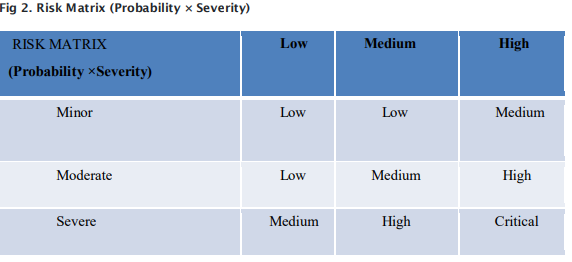
This analysis helps laboratories understand which risks require immediate attention and which may be considered acceptable. Many laboratories use a risk matrix to prioritize risks according to their probability and impact. Risks classified as high priority require immediate action, while lower-priority risks may be monitored through routine quality activities.
A common method is Failure Mode and Effects Analysis (FMEA), which evaluates potential failure modes and assigns scores for severity, occurrence, and detection. For example, mislabeling a patient specimen may have a high severity score because it can result in incorrect diagnosis and treatment. Therefore, the laboratory must implement strong identification controls to reduce this risk.
Risk evaluation involves comparing analyzed risks against predefined acceptance criteria. Laboratories must determine whether the level of risk is acceptable or whether additional controls are required. After assessing risks, laboratories must establish measures to eliminate or reduce them to acceptable levels. Risk assessments should be documented and periodically reviewed to ensure they remain relevant as laboratory processes evolve.
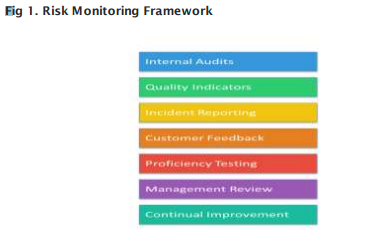
Methods for monitoring risks include:
- Internal audits.
- Management reviews.
- Quality indicators (e.g. specimen rejection rates, turnaround times)
- Incident reporting systems.
- Customer feedback. ? Proficiency testing results.
Risk management is a central requirement of ISO 15189 and an essential component of laboratory quality management systems. Through systematic identification, assessment, control, and monitoring of risks, medical laboratories can protect patient safety, improve service quality, and ensure reliable testing outcomes. Effective risk management encompasses all laboratory activities, from specimen collection to result reporting, and requires active participation from both leadership and staff. By integrating risk-based thinking into daily operations, laboratories not only achieve compliance with accreditation requirements but also foster a culture of continual improvement and excellence.
1. International Organization for Standardization. ISO 22367:2026 Medical laboratories—Application of risk management to medical laboratories. Geneva: International Organization for Standardization; 2026.
2. International Organization for Standardization. ISO 15189:2022 Medical laboratories—Requirements for quality and competence. 4th ed. Geneva: International Organization for Standardization; 2022.
3. World Health Organization. Laboratory quality management system handbook. Geneva: World Health Organization; 2011.
4. Clinical and Laboratory Standards Institute. Risk management techniques to identify and control laboratory error sources; approved guideline. Wayne (PA): Clinical and Laboratory Standards Institute; 2011.